Why I Built
SharePlane
My work was surviving in files and sessions while the reasoning that connected it kept getting expensive to reconstruct. I built SharePlane to preserve the work, its evidence, its decisions, and the path back into it.
Tony Malott · 9 October 2026
Read the essay →I've spent a good part of my life working on systems that have to keep functioning after the person who built them has gone home, moved on, or simply forgotten what they were thinking at two in the morning. You learn pretty quickly that a system isn't finished just because it works today. Someone needs to be able to understand it tomorrow, figure out what changed, and recover when something goes sideways. That has always made sense to me in engineering. Somehow, when the work moved into conversations and AI, I found myself violating the same principle.
Continue reading →Done Has a Half-Life
Systems thesis 2 September 2026
Everything meaningful should become explicitly done. Nothing meaningful should become permanently exempt from reconsideration.

AI governance
Authority, decisions and responsible delegation.
0214 tagged WorksEnterprise architecture
Durable systems, capabilities and operating models.
0321 tagged WorksGhostMesh
The architecture behind governed agent work.
0417 tagged WorksContext as code
Preserving meaning, relationships and evidence.
0510 tagged WorksEvidence
Claims, verification and the records behind the work.
0610 tagged WorksMulti-agent systems
Coordination across independently executing workers.
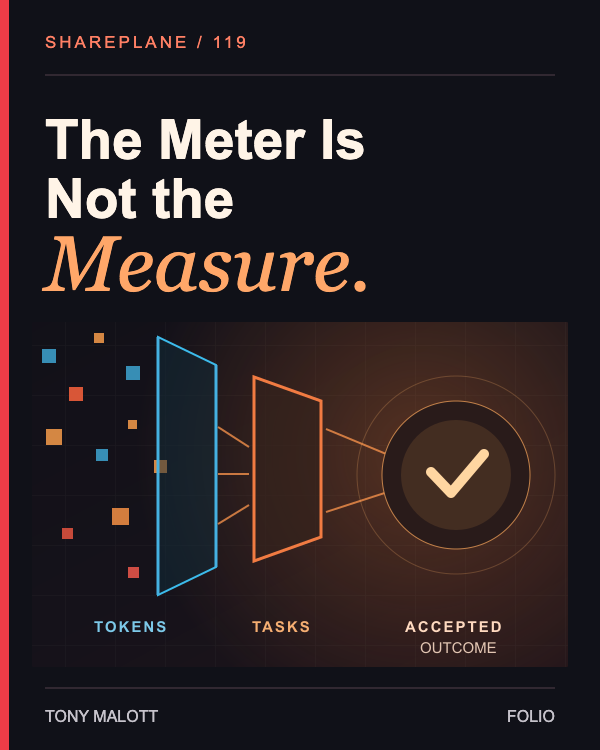
- 25 November 2026The Meter Is Not the MeasureDatabricks can count AI tokens and tested tasks. Enterprise governance still has to prove the accepted outcome, its cost, and who owns the consequences. The cheapest token is not always the cheapest task. And a task that passes is not necessarily a change that belongs in production.
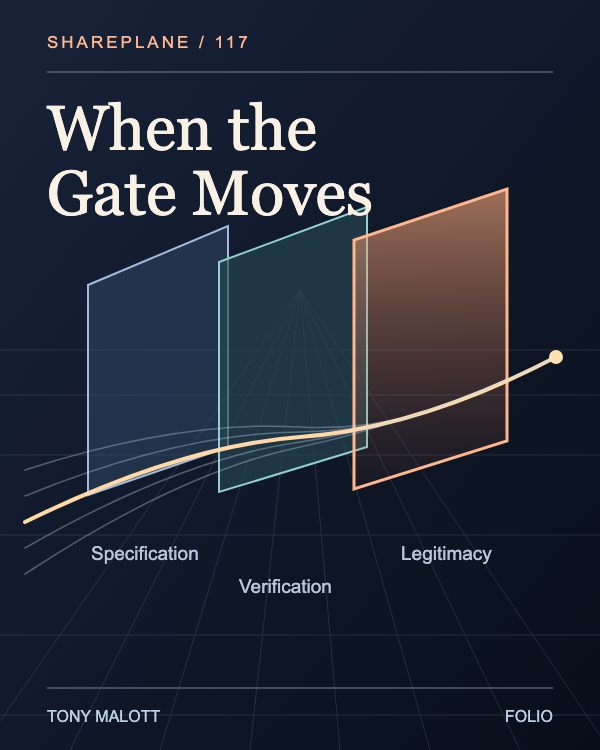
- 23 November 2026When the Gate MovesA falsifiable diagnostic of specification, verification, and legitimacy gates that may separate abundant generated code from accepted, valuable outcomes. Grounded in DHH's first-person account and explicitly bounded NBER and METR evidence. As AI makes implementation cheaper, distinguish failure to agree on intent, the cost of verifying conformance, and legitimate authority to accept consequences. Measure accepted useful outcomes rather than generated artifacts.
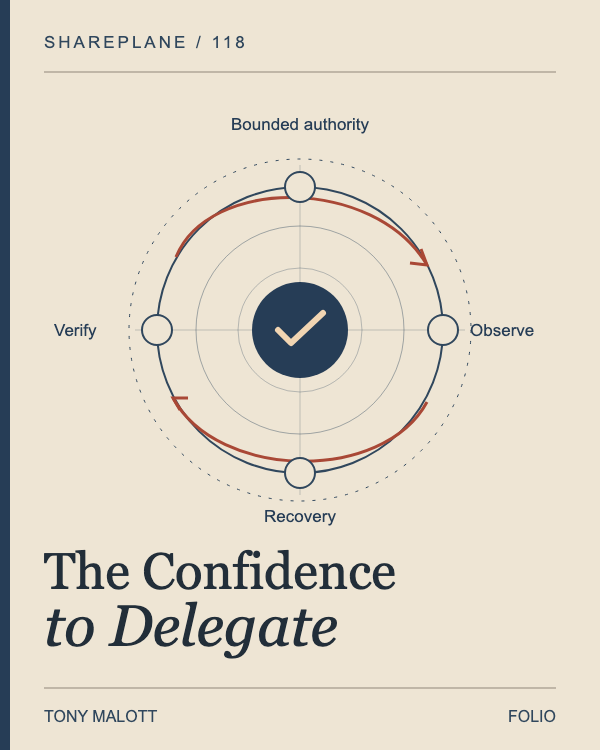
- 23 November 2026The Confidence to DelegateA conceptual engineering argument distinguishing responsible skepticism from unexamined trust, with testable controls and an explicit correlated-failure challenge. Operationally warranted AI delegation depends on bounded authority, observable outcomes, verified controls, recovery limits and accountable human judgment.
119 published Works · 2026-11-25 snapshot