The Confidence to Delegate
A conceptual engineering argument distinguishing responsible skepticism from unexamined trust, with testable controls and an explicit correlated-failure challenge. Operationally warranted AI delegation depends on bounded authority, observable outcomes, verified controls, recovery limits and accountable human judgment.
Read the article ↗View Work cover
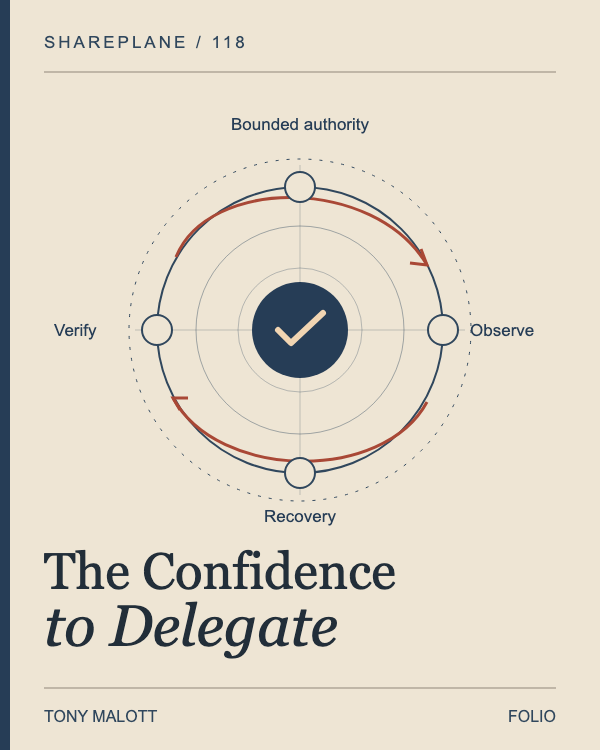
No outgoing Work relationships are declared in this catalog.
- companion toThe Agent Was Never the Unit of TrustWhy multi-agent work only becomes useful when the system verifies the worker, the boss, and the checker.
Verified worker/boss/checker roles complement bounded authority, recovery and operational assurance.
Explore its graph →Citation details
companion_toThe Agent Was Never the Unit of Trust → The Confidence to Delegate
Companion work
Read native Work ↗
Published Readers that explicitly compare this Work. These are editorial reading links, not independent corroboration.
- companionBeyond Vibe Coding: Engineering in the Age of AI Agents ↗
Examines the distinction between capability and authority, and why operational assurance and recovery determine warranted delegation. It complements the trust ladder and the boundary between verified behavior and release permission.
- companionThe Agent That Remembers Why It Changed ↗
Distinguishes model capability from operational assurance and warranted delegation. A record of historical rationale does not grant newer operational authority.